

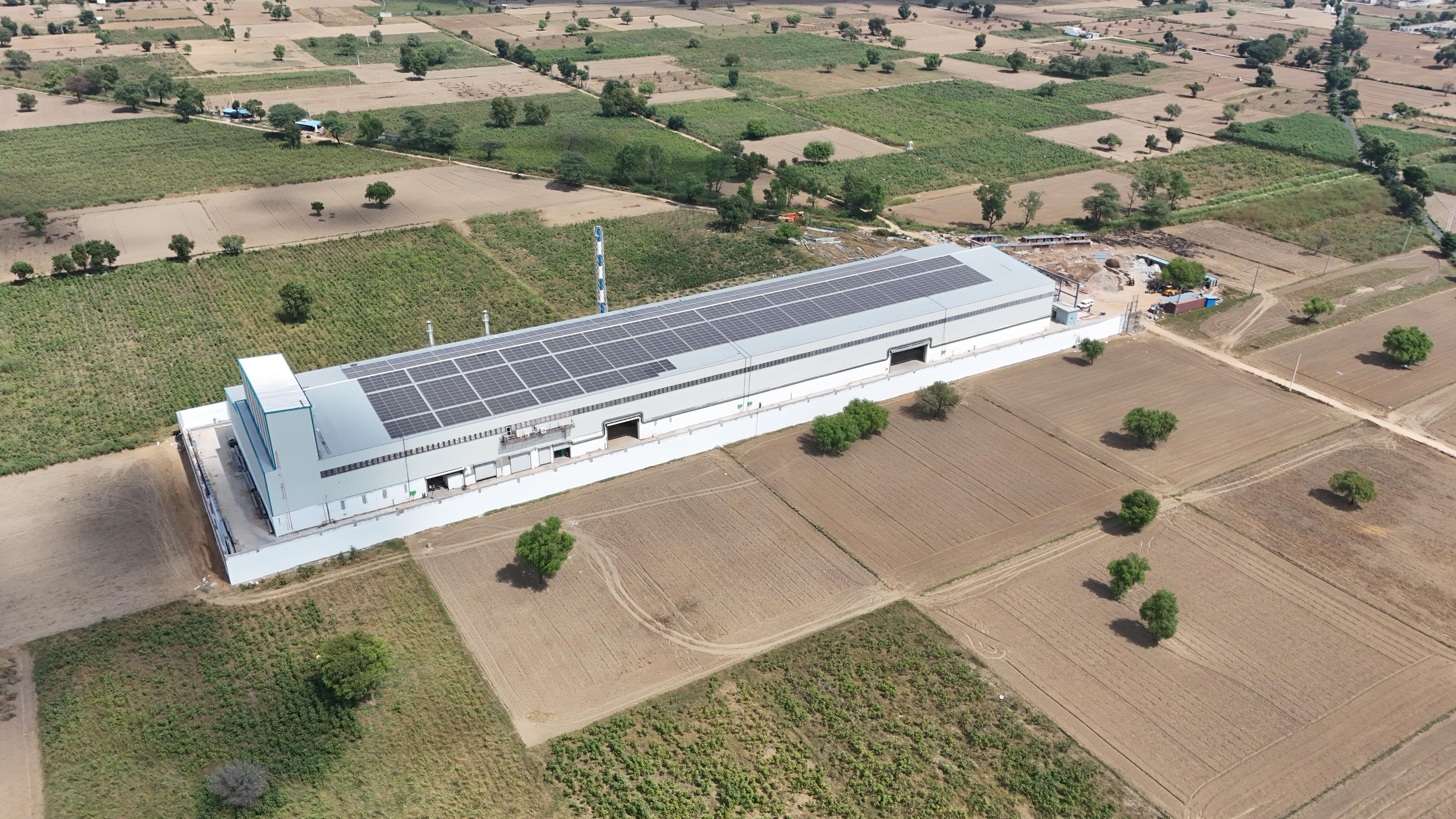
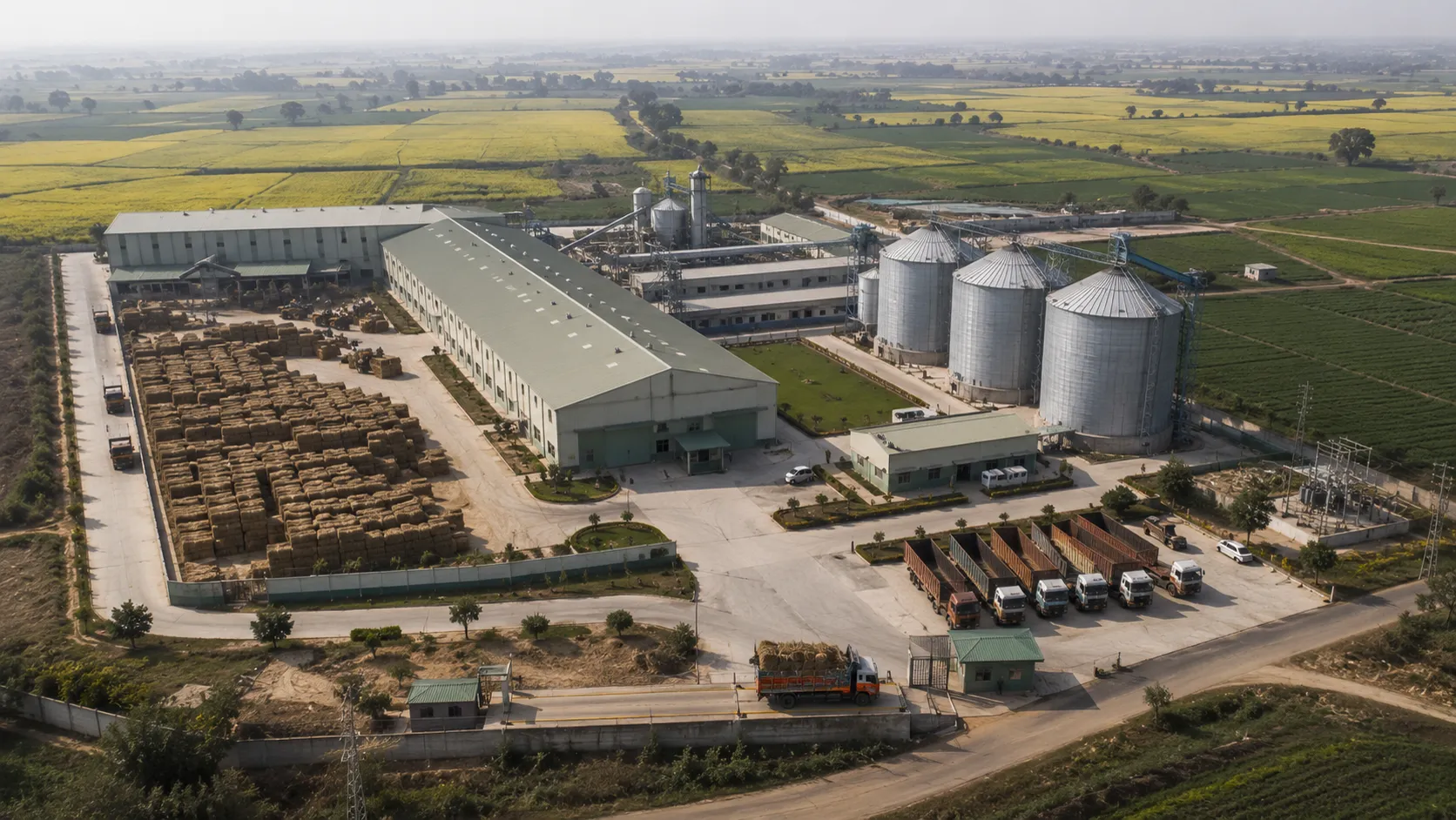
Rewari facility · live specs
Walk the floor,
without leaving your desk.
A full walkthrough of the Rewari facility — feedstock intake and weighbridge, rotary drum dryers, pellet mills, the on-site quality lab and covered storage — shot floor to floor.
Three mills,
tuned per feedstock.
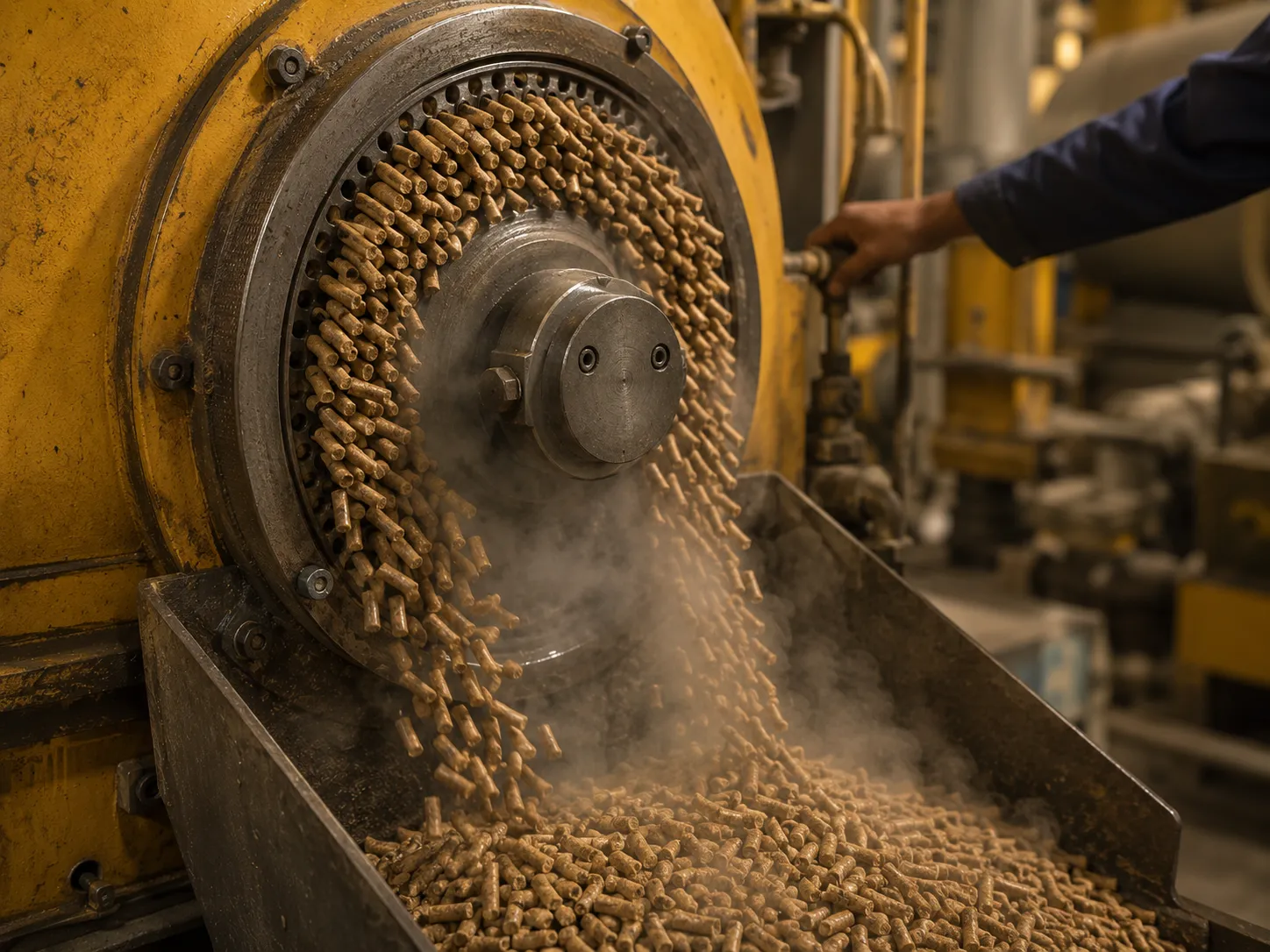
Mill A — Paddy line
Dedicated paddy straw line. Highest throughput, optimised for CAQM-priority feedstock.
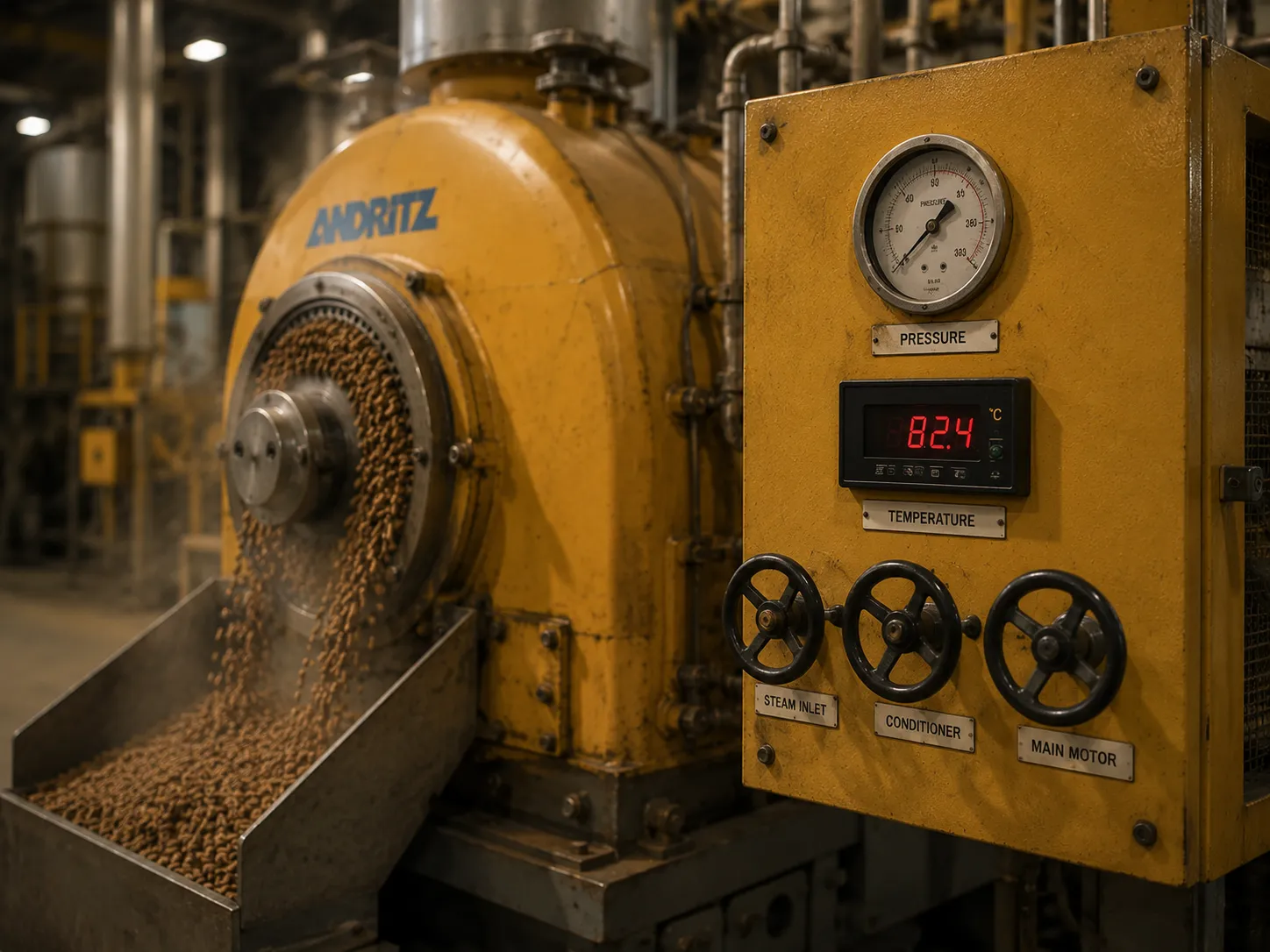
Mill B — Mustard line
Mustard husk dedicated line. Highest GCV output, low ash, premium-grade pellets.
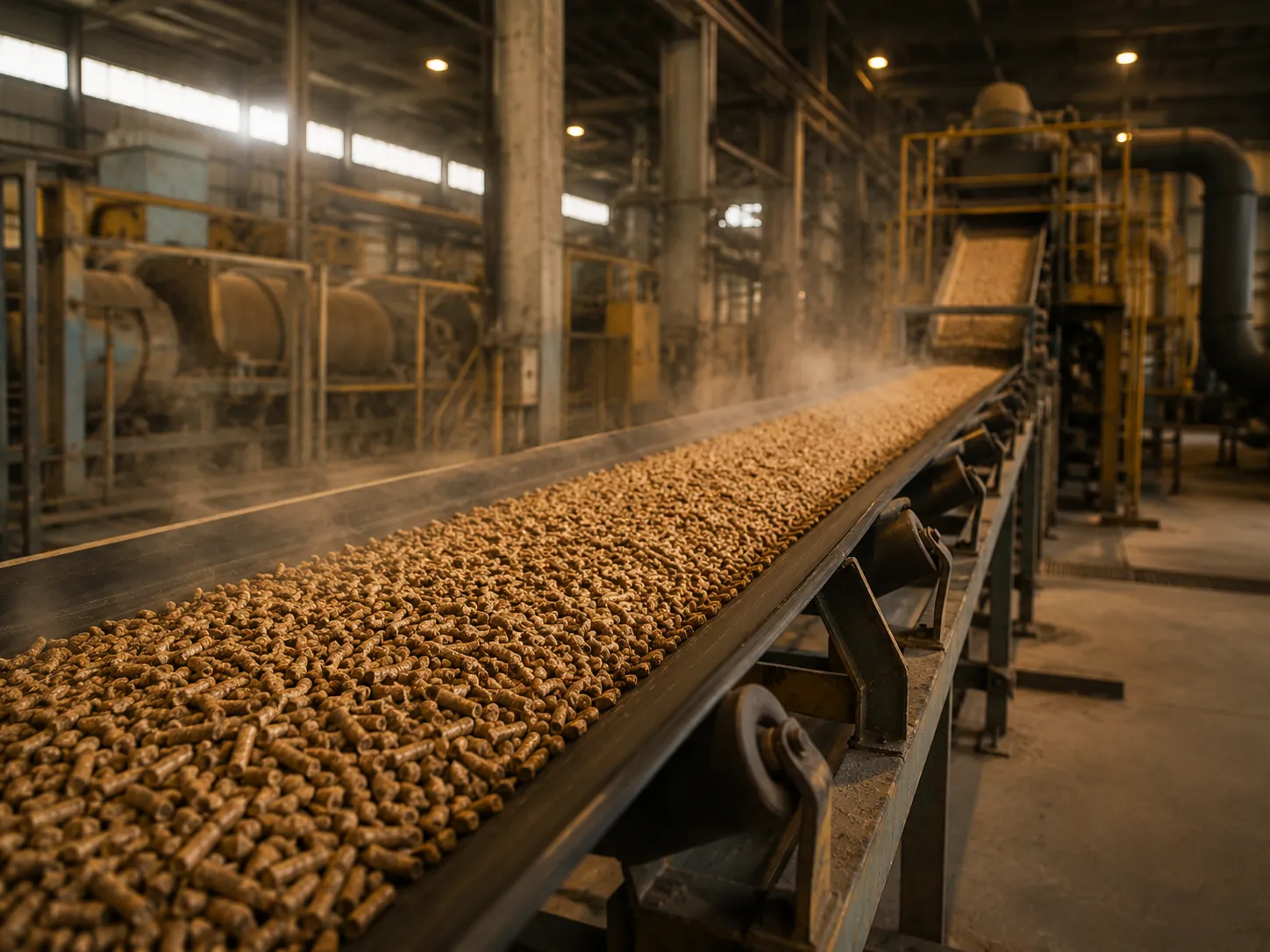
Mill C — Mixed line
Rice husk and mixed agro-blend line. Volume buffer and briquette feed.
Eight stages,
field to firebox.
Intake
Trucked agro residue weighed at gate.
Moisture test
Lot rejected above 20% moisture.
Drying
Rotary dryer brings down to ≤14%.
Grinding
Sized to feed pellet die.
Conditioning
High pressure, elevated temperature and steam conditioning activate natural lignin and silica in the biomass — no synthetic binders or additives used.
Pelletising
Pressed at 250 kW per mill.
Cooling & screening
Fines recirculated. Output graded.
Bagging & dispatch
HDPE bag, jumbo, or loose tipper.
Every batch,
tested before it ships.
We run a fully-equipped fuel-analysis lab on-site at Rewari. Lab reports are dispatched with every truck. Buyers can request retained samples for independent re-test.
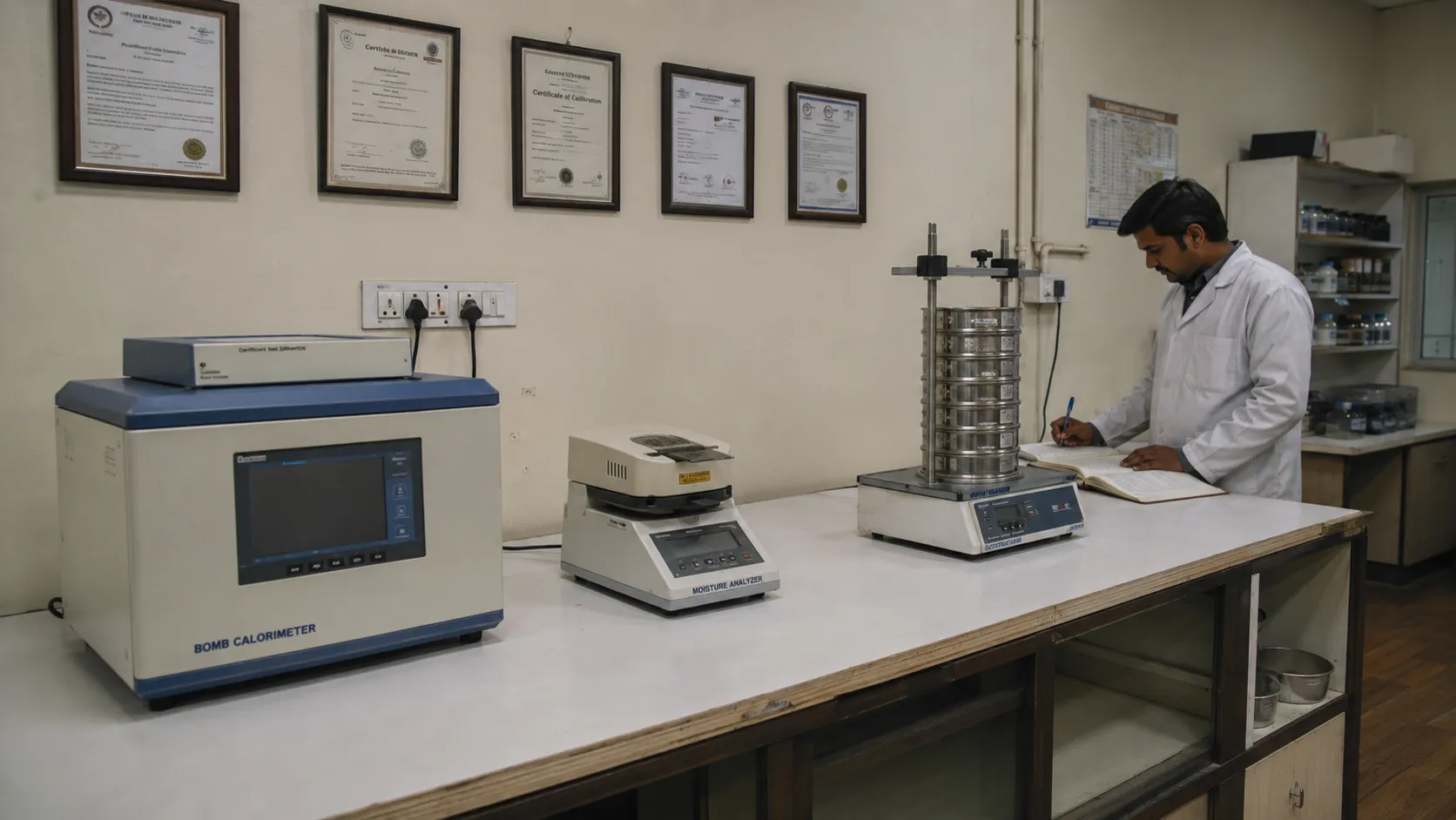
Bomb calorimeter
GCV / NCV measurement, IS:1350 compliant.
Moisture analyser
Hot-air loss-on-drying, per batch.
Muffle furnace
Ash content, 850°C standard burn.
Sieve shaker
Fines and length distribution.
Pellet durability tester
PDI measurement on tumbling drum.
Sulphur / chlorine titrator
Halide and sulphur trace levels.
Density meter
Bulk density per IS standards.
Retained sample archive
50 g / batch · 90-day retention.
3.5 MW captive solar,
every unit stays in-plant.
Our Rewari facility runs a 3.5 MW captive solar installation. Every unit of solar power generated is consumed within the plant — pellet mills, rotary dryers, bagging lines, quality lab and support systems all draw from it. Zero export to grid.
Haryana receives 5.0–5.5 peak sun hours per day. At that yield, our 3.5 MW array generates an estimated 52 lakh kWh per year — offsetting ~4,300 tonnes of CO₂ annually versus drawing the same energy from the Haryana DISCOM grid.
The result: a biomass fuel plant powered substantially by the sun. The combination of zero-sulphur feedstock, solar-powered production, and agricultural residue utilisation makes K2 one of the lowest Scope 1 + Scope 2 producers in its category.
Industrial electricity in Haryana costs ~₹6.95 per unit (HERC 2025–26 tariff). At 52 lakh units per year, solar captive use saves an estimated ₹3.5 crore annually — reducing both operating cost and Scope 2 carbon footprint.