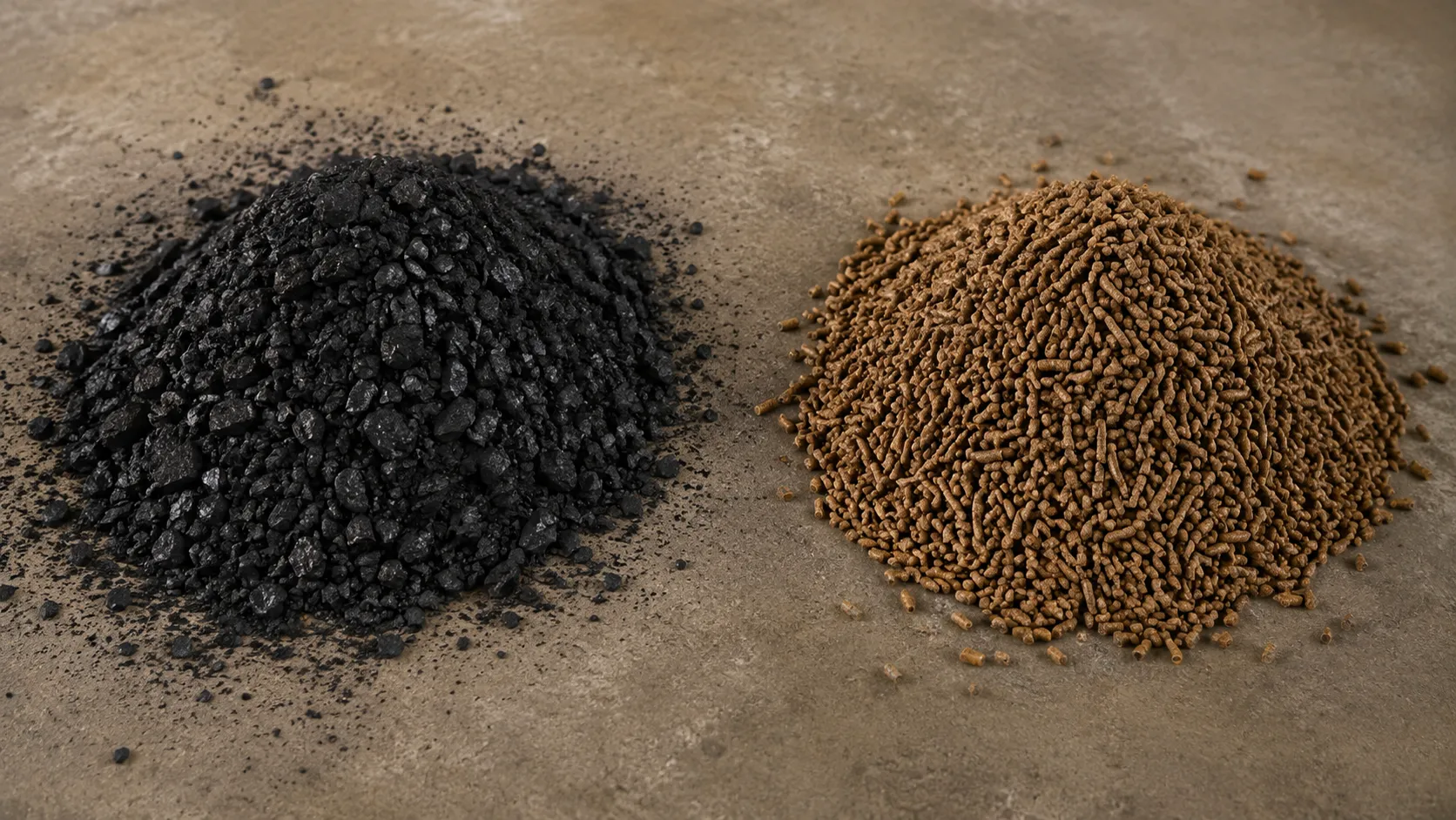

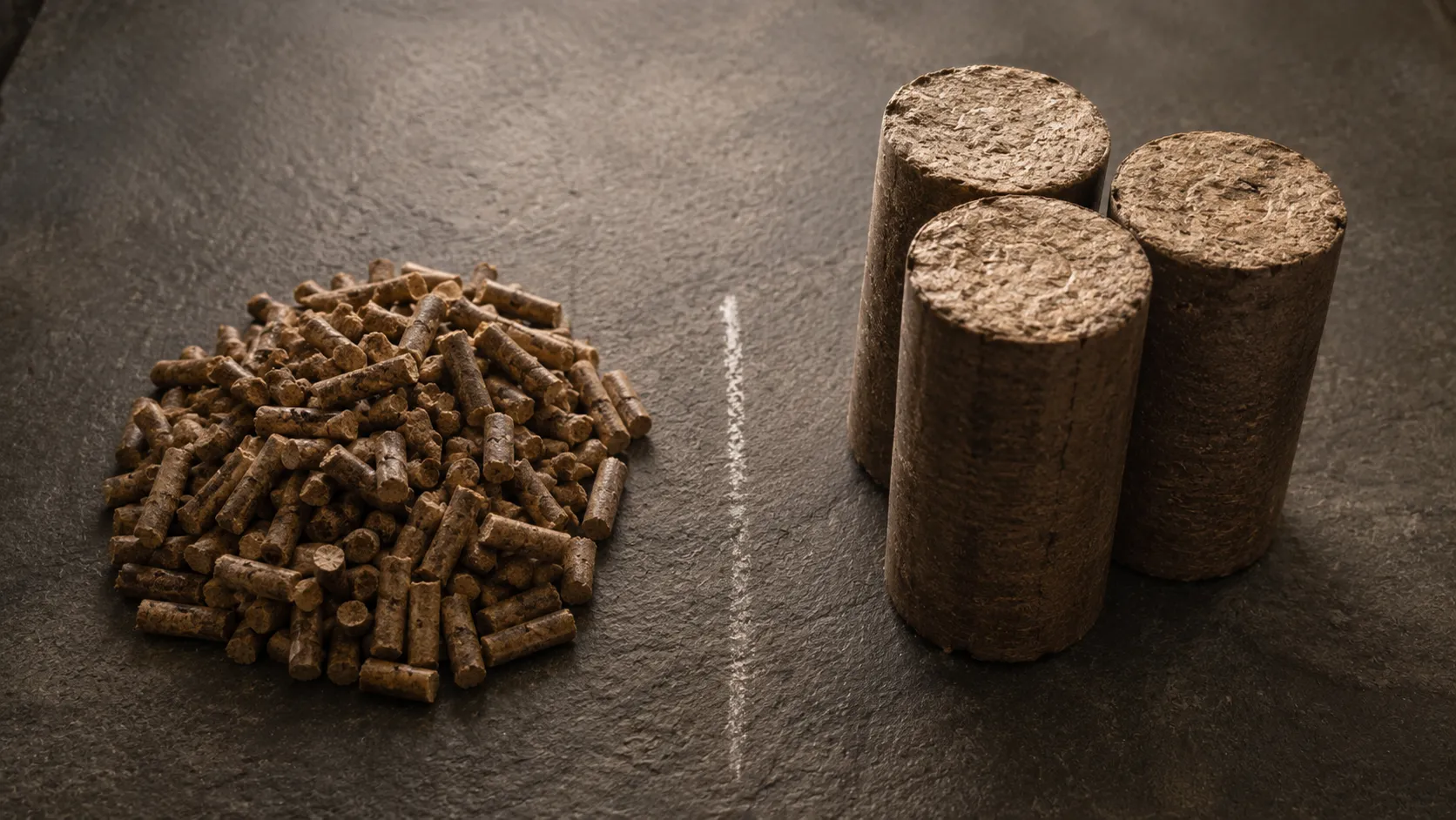
The most common misconception we encounter in a first conversation with a new customer is that the pellet vs briquette decision is a GCV comparison. It is not. Our mustard-blend pellets deliver approximately 3,900 kcal/kg. Our 90 mm briquettes also deliver 3,200–3,600 kcal/kg. The calorific values are essentially equivalent. The difference lies in what happens when those fuels meet your specific combustion system.
What pellets do well
Pellets are a controlled-geometry fuel. At ≤25 mm diameter and ≤35 mm length, they flow predictably through auger feeders, pneumatic conveying systems, and spreader-stoker mechanisms. If your boiler was designed for automated fuel feeding — particularly if you are running an AFBC with a gravimetric feeder or a pellet burner installed for a small industrial boiler — pellets are the format your handling system was engineered around.
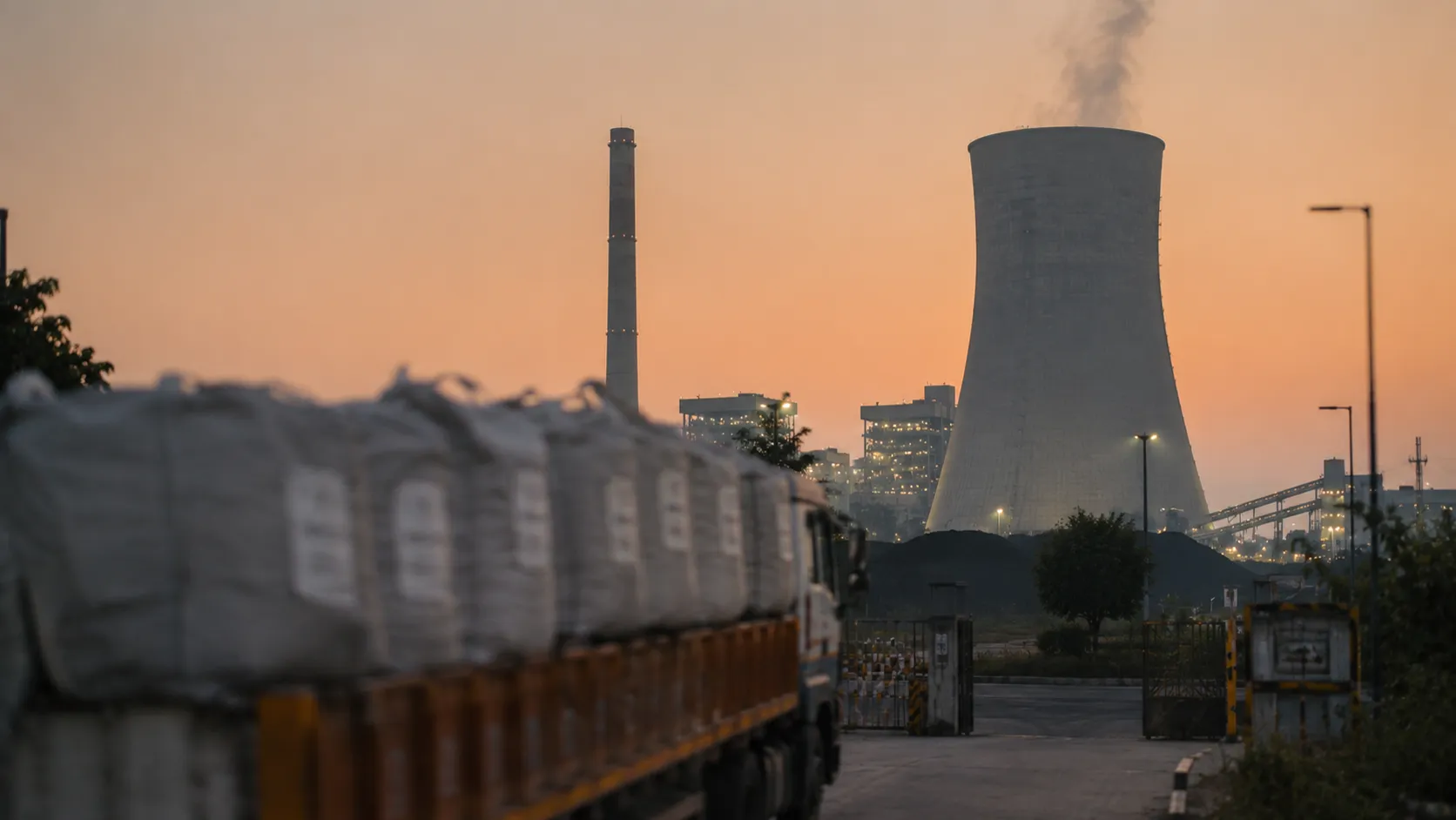
Pellets also work well in co-firing with coal. At 5–10% blend ratios, the size difference between a pellet and a coal particle is manageable in most existing handling systems without modification. For Delhi-NCR thermal plants complying with the CAQM mandate, pellets are the specified format — the mandate explicitly refers to biomass pellets, not briquettes.
What briquettes do well
Briquettes at 90 mm diameter and 100–300 mm length are a high-density fuel designed for manual or semi-mechanised feeding into large-capacity combustion chambers. Their density — typically 1,000–1,100 kg/m³ compared to pellets at 600–700 kg/m³ — means they have a slower burn rate per unit volume. In a brick kiln, a distillery boiler, or an industrial furnace where a sustained, even heat output over a long cycle is the requirement, briquettes outperform pellets precisely because they do not burn through quickly.
“A briquette is not a fat pellet. It is a different combustion model — slower, more sustained, better suited to applications where you want four hours of heat, not one.”
— Vikram Anand, Head of Product & Quality
Moisture at ≤6% (vs. pellets at ≤14%) means briquettes have a higher net calorific value for the same gross GCV — less heat is lost vaporising moisture during combustion. For continuous-load applications like a distillery boiler or a paper mill steam system running 20-hour shifts, this difference accumulates into a meaningful efficiency gain over time.
The decision framework
- AFBC boiler with automated feeding: pellets
- CAQM co-firing at a thermal power plant: pellets (mandated format)
- Brick kiln with manual firing: briquettes
- Distillery or sugar mill cogen (continuous load): briquettes
- Food processing or chemical plant (process heat): briquettes
- Pellet stove or small commercial boiler: pellets
- Mixed use or uncertain application: request samples of both and run trials
When to run trials before committing
If your boiler has run exclusively on coal for more than five years, there is operational value in a supervised trial before committing to a full supply contract. The trial tells you about ash accumulation patterns, feed rate adjustments needed, and any maintenance items that need attention before running a high percentage of biomass. We dispatch 50 kg samples within 48 hours, and our technical team can join a first firing trial at no cost for customers in our road radius.
Send us your boiler model, installed fuel handling system, and current monthly fuel consumption. We will give you a format recommendation, an approximate blend ratio to start at, and the landed cost per kcal for your location. The comparison handles itself from there.