
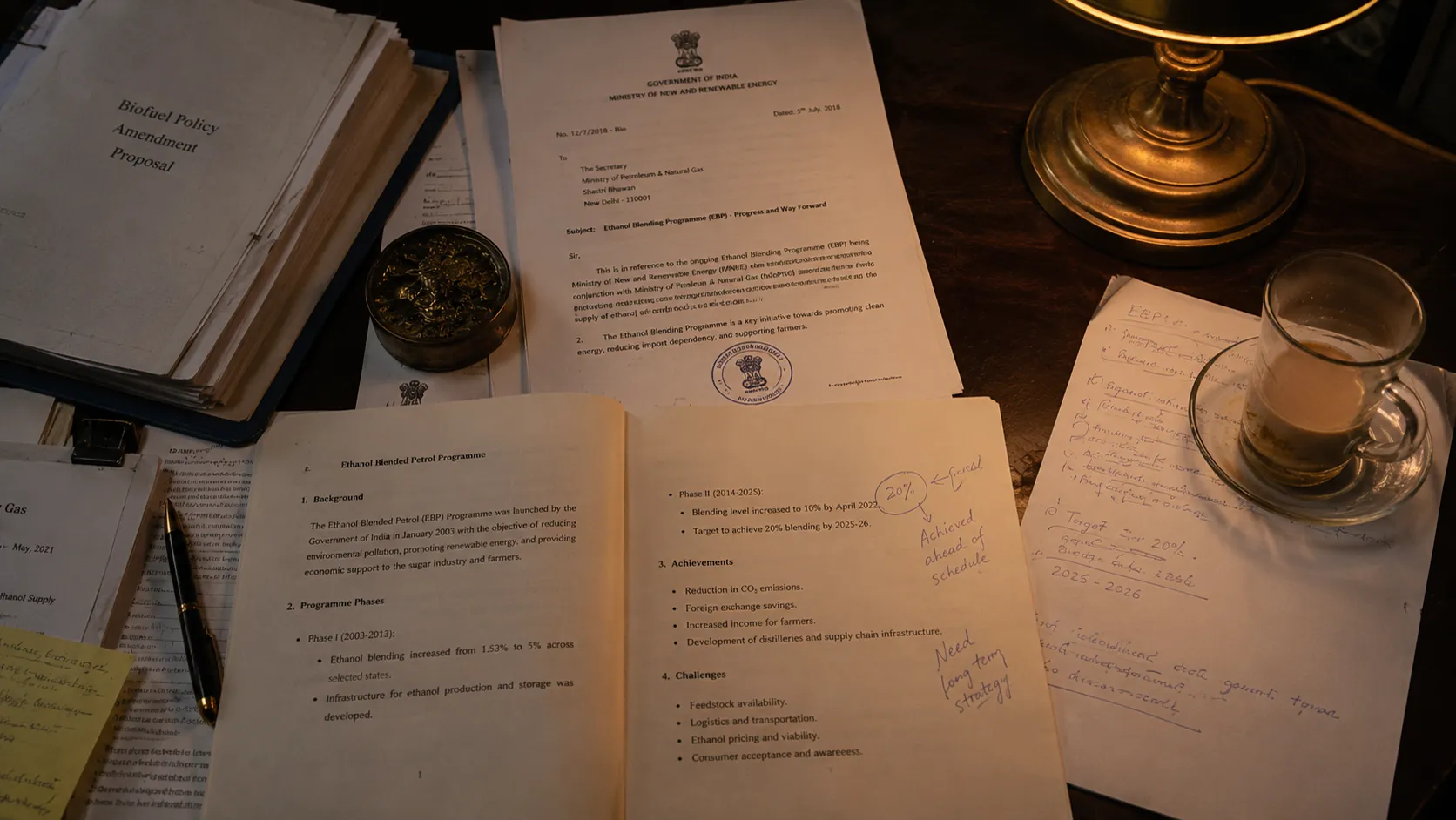
The Commission for Air Quality Management issued a direction in 2021 requiring coal-based thermal power plants in Delhi-NCR to co-fire a specified percentage of paddy-straw based biomass pellets. The framing matters: it is a direction, not a guideline. Plants that do not comply face regulatory consequences from CAQM, which holds statutory authority over air quality management in the region.
The mandate in plain language
The direction covers all coal-based thermal power plants in the NCR and the adjoining states of Punjab, Haryana, Rajasthan, and Uttar Pradesh. It requires co-firing using biomass pellets manufactured from paddy straw — not any biomass, specifically paddy straw — in proportions that CAQM specifies by plant category and boiler type. The percentage targets have stepped up over successive compliance cycles.
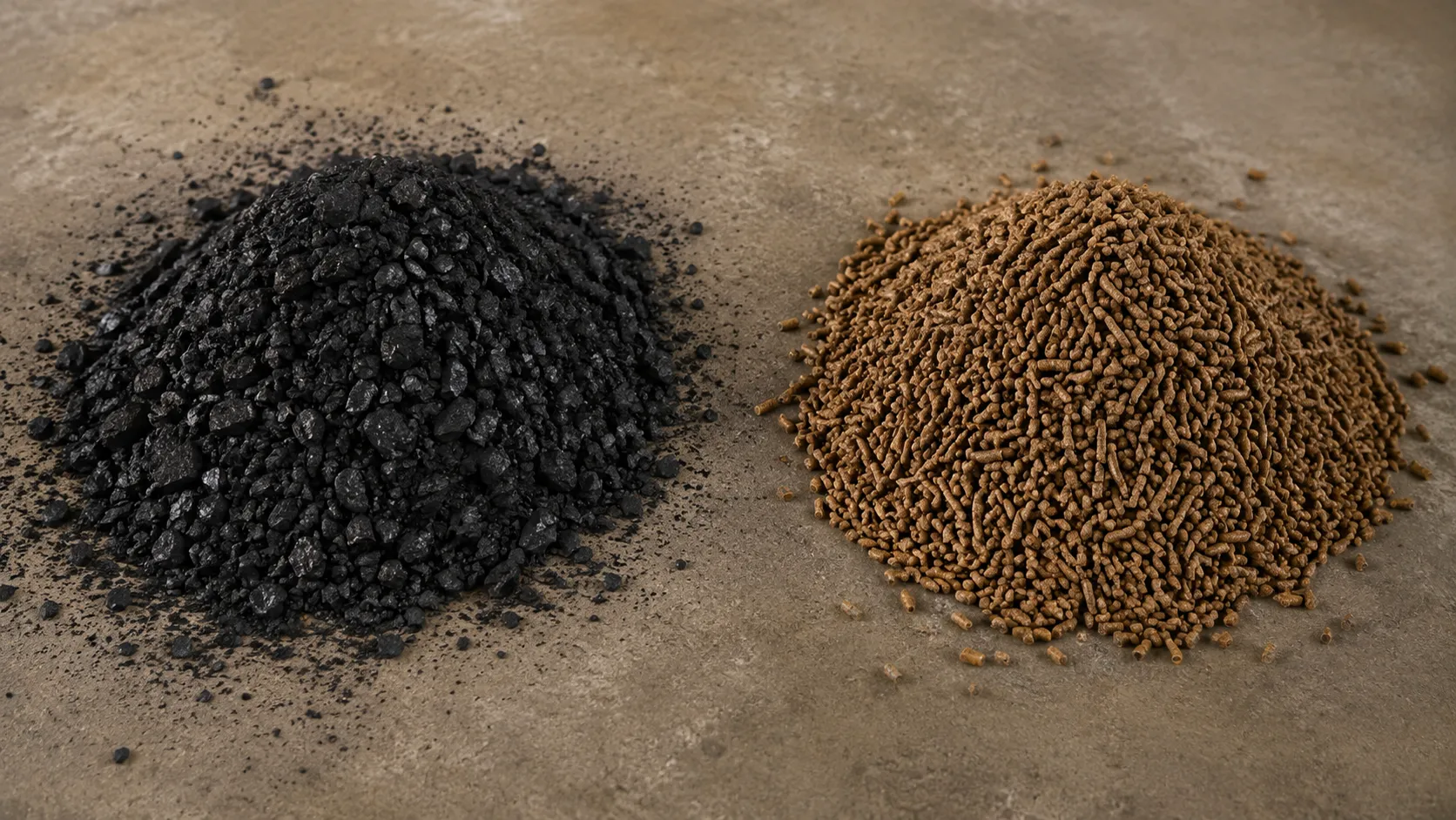
What the mandate does not require is a complete switch to biomass. Co-firing at 5–10% biomass blend is the operational range most plants are working within, and CAQM's direction acknowledges that FBC and CFBC boilers have different operational constraints than older drum boilers. The blend ratio applicable to a given plant depends on its boiler type, furnace design, and installed material handling capacity.
Why paddy straw specifically
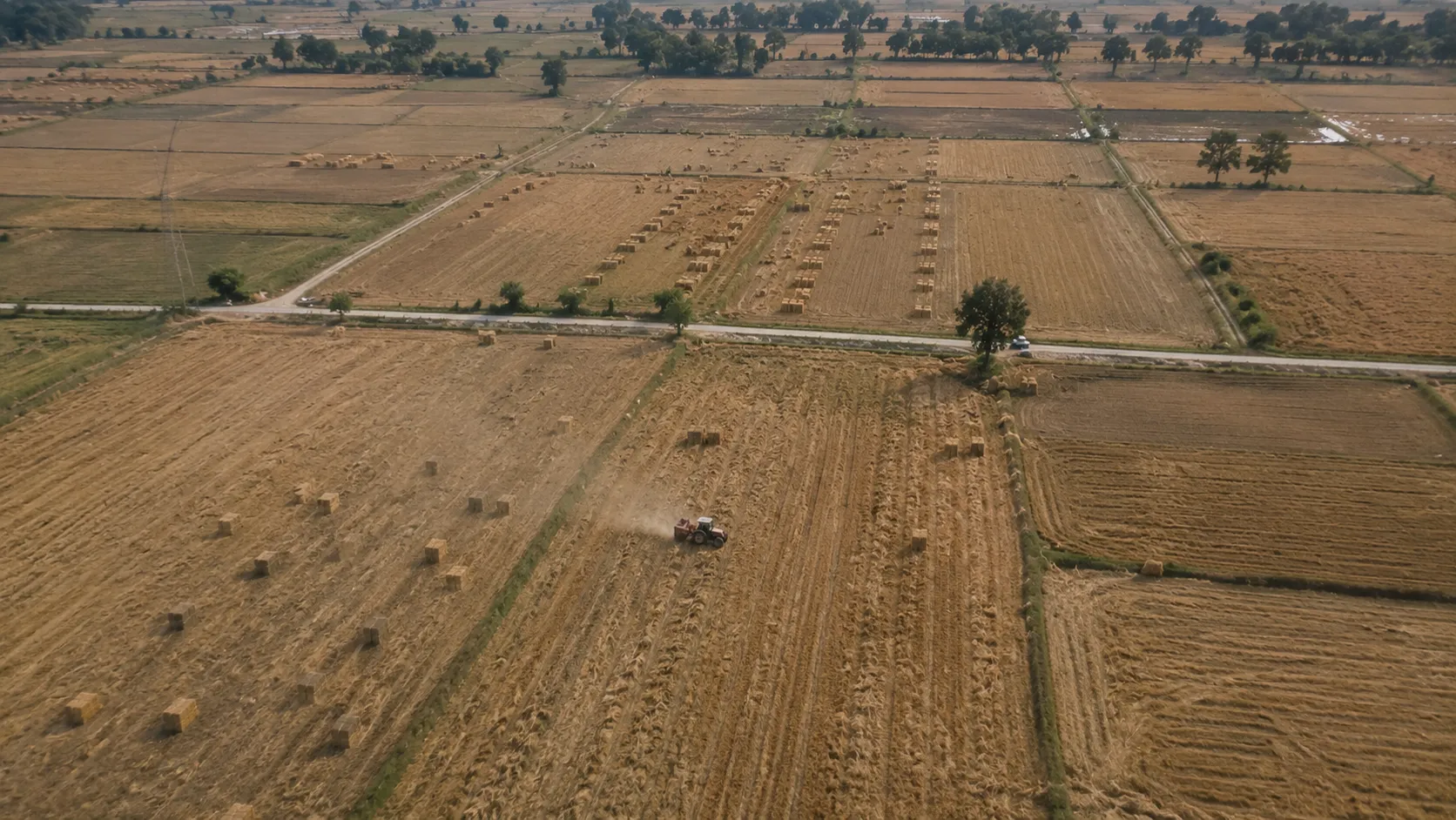
The crop residue burning problem in NCR is predominantly a paddy straw problem. Post-harvest, paddy straw left in the field after combine harvesting is difficult to manage — too bulky to transport economically in raw form, too wet to burn efficiently indoors, and too short-fibred to make good animal feed. Open-field burning is the default disposal method, and it accounts for a substantial fraction of the PM2.5 load that blankets the NCR in October and November.
By specifying paddy straw as the feedstock, CAQM creates a demand signal at the exact point in the supply chain where the burning problem is worst. Plants cannot satisfy the mandate by co-firing wood chips or agricultural waste of other types — the feedstock specification is deliberate and enforced.
The supply chain problem the mandate created
Paddy straw is seasonal, bulky, and geographically concentrated. Harvesting is in October–November; the rest of the year the supply comes from storage. To supply a thermal plant at 5% blend year-round requires a densification facility — a pellet mill — that can process the raw straw and hold finished stock. Raw paddy straw has a bulk density of roughly 40–60 kg/m³. Pelletised, it reaches 600–700 kg/m³. The economics of transport only work with the pelletised form.
“The mandate creates a floor for demand. Our job is to be positioned well above that floor — not to chase compliance at the margin.”
— Priya Mehta, Head of Policy & Compliance
Where K2 Biofuels sits
Our Rewari, Haryana plant is 70 km from the Delhi-NCR boundary, placing us inside the CAQM priority zone for feedstock sourcing. We are MNRE-registered and produce paddy-straw based pellets that meet the feedstock specification. The proximity to both the paddy straw source areas of Haryana and Punjab and the thermal plants of the NCR is a structural advantage — not a coincidence of location, but a deliberate choice made at the time of site selection.
What to watch in the next compliance cycle
CAQM has indicated that co-firing percentages will continue to increase. Plants currently at 5% are expected to scale toward 10% and, for newer installations, higher. The enforcement mechanism has also strengthened — CAQM now has direct authority to issue directions to Central and State Government entities, and the liability for non-compliance rests with plant operators, not just the fuel suppliers. For procurement teams at thermal plants, this means the mandate is not a checkbox to satisfy once — it is an ongoing operational requirement that will tighten.
For K2 Biofuels, the trajectory is clear. Our 252 TPD installed capacity is sized to supply the near-term demand from plants in our radius. As the mandate tightens, we are positioned to scale feedstock aggregation and pellet output in proportion. The policy risk for us is low; the policy risk for plants that have not yet established supply chain relationships is higher than many procurement managers currently price.