
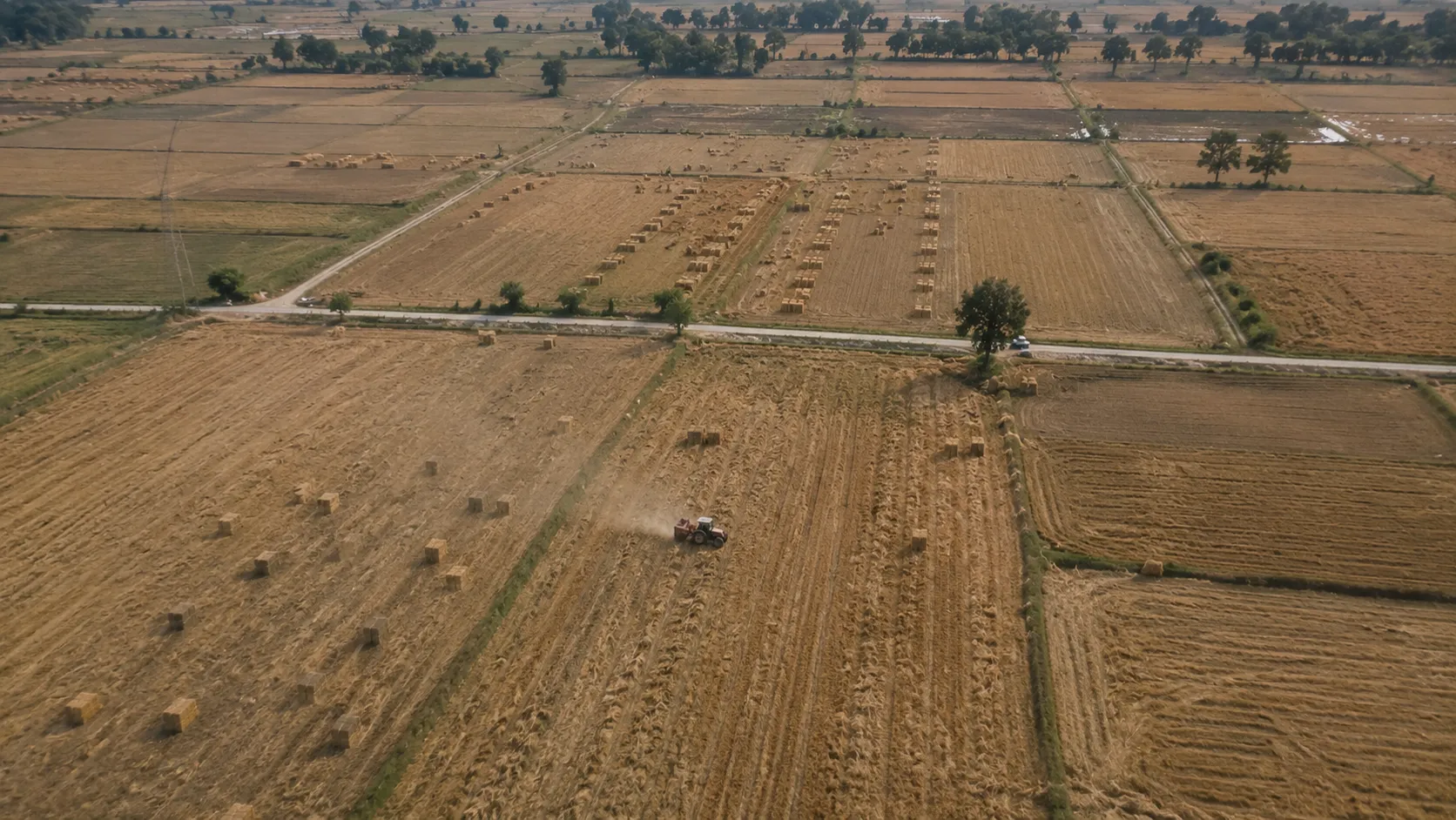
At 252 TPD pellet output with an efficiency ratio of approximately 1.4:1 (feedstock to pellet), we process roughly 350 tonnes of raw biomass on a full production day. Spread over a year and accounting for seasonal variability, this requires a feedstock catchment of substantial scale. Our current aggregator panel covers farms across Haryana, Punjab, and western Uttar Pradesh — an area we estimate at approximately 8,400 acres of cultivated land in our active sourcing radius.
Why aggregators, not direct farm procurement
Direct procurement from individual farms is operationally feasible at small scale but breaks down above a few thousand tonnes per month. The logistics of coordinating hundreds of small landholders — each with different harvest timings, different varieties, different distances from our plant — require a layer of local knowledge and relationship management that is better handled by regional aggregators than by a central procurement team.
Our aggregator panel consists of individuals and small firms who have existing relationships with farming communities in their districts. They coordinate collection, run initial moisture checks in the field, arrange local transport to our intake point, and take commercial responsibility for feedstock quality at the gate. We audit their practices, not just their product. An aggregator who delivers low-moisture, uncontaminated feedstock consistently gets contract renewal and volume growth. One who does not gets replaced.
What we test at intake
- Moisture: Every load is moisture-checked at the intake weighbridge before unloading. Loads above our threshold are rejected or renegotiated.
- Visual contamination: Stones, soil, excessive dirt, or non-biomass material trigger a rejection or partial discount depending on severity.
- Feedstock identity: We verify that paddy straw loads are actually paddy straw, not mixed with lower-value materials. Misrepresentation of feedstock breaks the CAQM traceability requirement.
- Weight: Certified weighbridge measurement at intake forms the basis of the supplier payment.
The seasonality problem
Paddy straw availability peaks in October–November following the kharif harvest. Mustard is a rabi crop with availability in March–April. Rice husk, as a byproduct of rice milling rather than field harvesting, is more continuous but geographically concentrated near milling clusters. Holding supply constant through the year requires either storing raw feedstock (high volume, moisture risk), blending across feedstock types as season dictates, or holding finished pellet inventory between seasons.
We use all three strategies, weighted by economics. Raw feedstock storage is kept to a minimum — moisture ingress during storage degrades quality and creates fire risk in large quantities. Our 5,500 MT covered storage at the Rewari plant holds finished pellets rather than raw material wherever possible. The blend composition shifts by season: paddy-heavy in November–January, mustard-heavy in April–May, rice husk through the lean months. The GCV is managed across the blend to stay within our specified output range.
Traceability from farm to dispatch
Each intake load is logged against the aggregator, the district of origin, and the estimated land parcel. GPS coordinates of the collection point are recorded for loads that come with field collection documentation. This data links through our batch production records to the finished pellet dispatch. The result is a traceable chain: from a given dispatch lot, we can identify which aggregators supplied the feedstock and the approximate farm origin area.
“Traceability is not just a compliance requirement for us — it is how we catch quality problems early and keep the aggregator panel honest. If a batch performs poorly, we can trace it back to source.”
— Suresh Yadav, Head of Supply Chain
What this means for customers
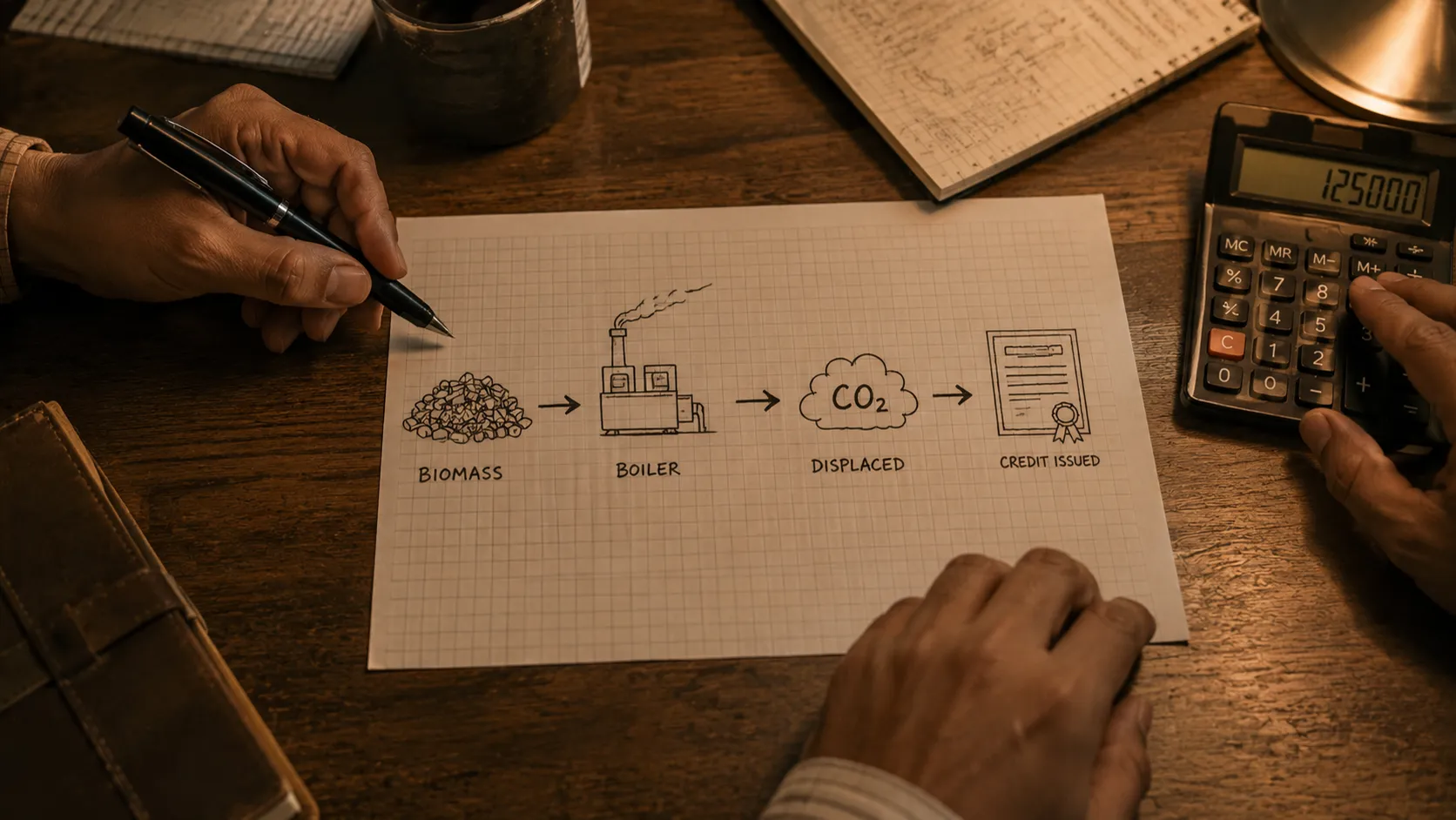
For customers working on carbon credit applications under VCS or Gold Standard, feedstock traceability from field to dispatch is a documentation requirement. We can provide origin certificates and supply chain traceability reports on a per-dispatch basis. For customers making ESG claims about supply chain emissions, the traceability chain lets us calculate avoided burning emissions against a specific feedstock and volume. This is not a standard part of the dispatch documentation — it requires a brief commercial discussion to structure the reporting correctly for your application.