
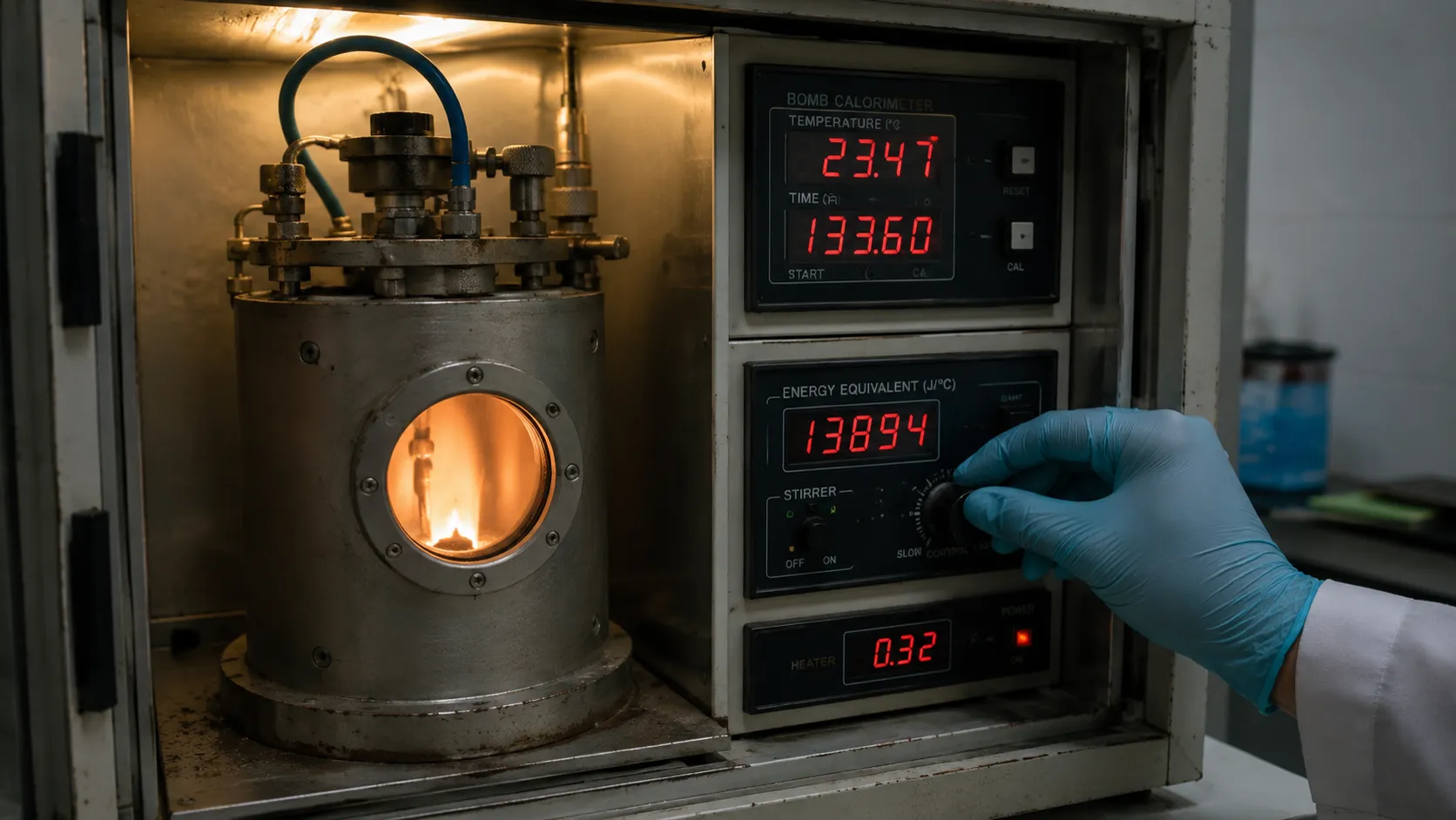
A bomb calorimeter measures calorific value by burning a precisely weighed fuel sample inside a sealed oxygen-pressurised vessel submerged in a known mass of water. The heat released by combustion raises the water temperature, and from the temperature rise — corrected for the heat capacity of the vessel — you calculate the gross calorific value in kcal/kg or MJ/kg. The instrument we use at the Rewari quality lab runs this cycle in approximately 12–15 minutes per sample.
Why in-house testing
Third-party laboratory testing takes 48–72 hours for a result and costs per-test. For a plant running at 252 TPD, with batches going out daily, outsourcing would mean dispatching product without a current GCV measurement, or holding stock for three days waiting for a result. Neither is operationally or commercially acceptable. The capital cost of an in-house instrument is recovered inside the first year on test frequency alone.
There is a quality control argument that is equally important. An in-house lab means the sample is handled by our team from sampling to result — no transit time during which the sample could pick up moisture, no chain-of-custody questions, and no wait for a queue at an external facility. When a result looks anomalous, we can re-test the same day.
What the test actually measures
The bomb calorimeter gives you gross calorific value at constant volume (GCV or higher heating value). This is the number quoted on our lab report. It measures the total heat released including the latent heat of water vapour condensation. Net calorific value (NCV, or lower heating value) is lower by the heat of vaporisation of moisture in the fuel — for pellets at ≤14% moisture, the difference is typically 200–400 kcal/kg. When comparing to coal specifications, confirm which basis the coal is quoted on; industrial coal contracts in India are usually specified on a net calorific value basis.
“The number on the lab report is not a promise — it is a measurement of the actual batch you are receiving. If the batch underperforms, we can trace it to the sample and the instrument run.”
— Ritu Sharma, Quality Lab Manager
Other parameters on the report
- Moisture (%): Measured by oven-drying at 105°C to constant mass. Our specification is ≤14%.
- Ash content (%): Measured by burning the sample at 550°C in a muffle furnace. Residual mass as percentage of original.
- Fines (%): Sieve test. Fraction passing 3.15 mm expressed as percentage of total mass. Our specification is ≤5% for pellets.
- Proximate analysis: Breakdown into moisture, volatile matter, fixed carbon, and ash — useful for boiler operators modelling combustion profiles.
Retained samples
Every batch sampled for GCV testing has a sealed reference sample retained in our lab for 90 days post-dispatch. Sample ID and retention date are printed on the dispatch documentation. This means that if you receive a batch and your in-house test produces a significantly different result, we can run a comparative test using the retained sample from the same batch. In our experience, significant discrepancies almost always trace to sampling methodology differences rather than actual product variation — but the retained sample gives us a basis for resolution that does not depend on memory or documentation alone.
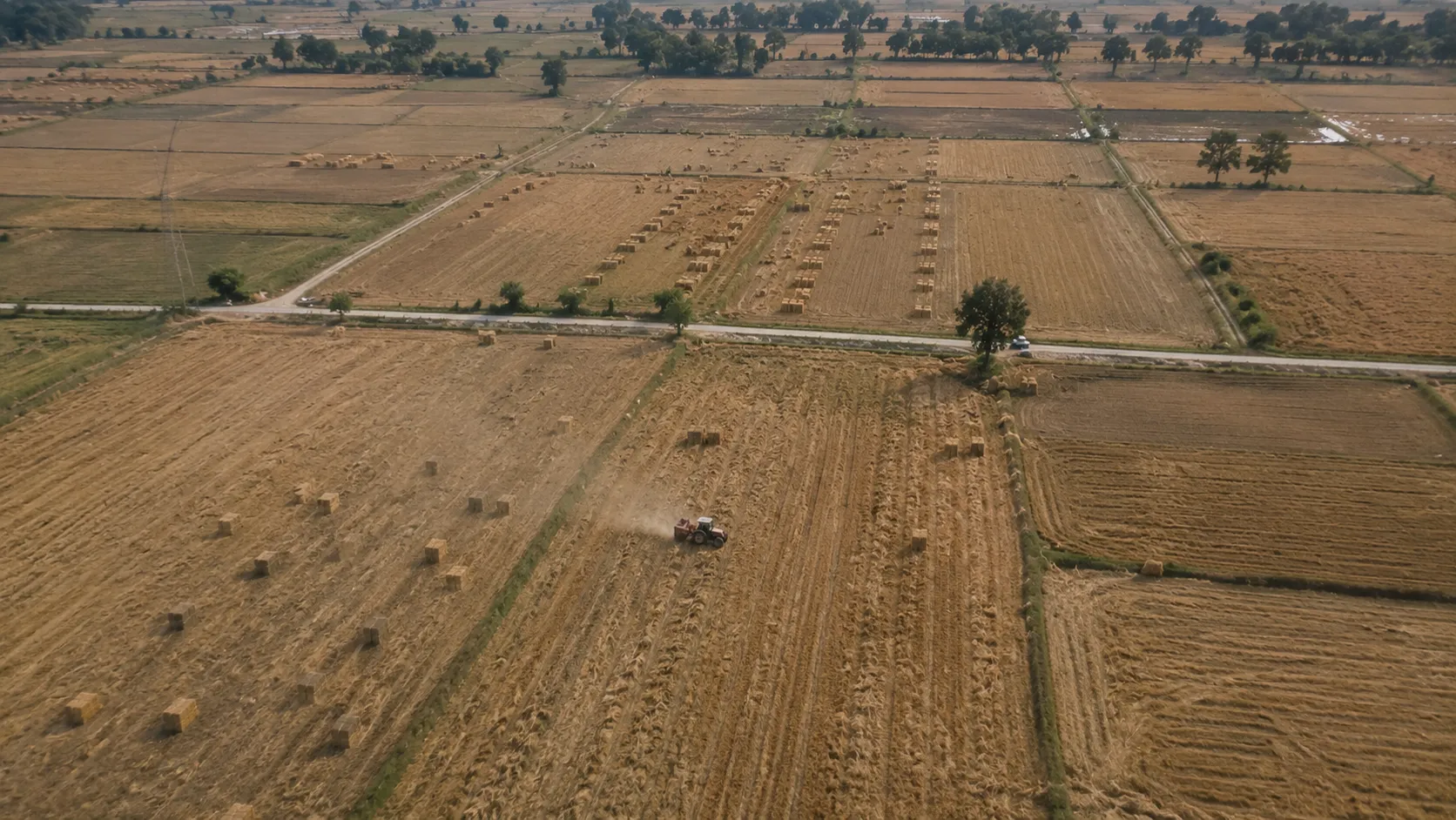
We also run intake testing on incoming feedstock — raw mustard stalk, paddy straw, or rice husk — measuring moisture and checking for contamination before the material enters the mill. This intake data is not on the customer dispatch report, but it is available on request and forms part of the traceability documentation for customers working on carbon credit applications.