
The K2 Group of Industries has been operating industrial businesses in Haryana for over two decades. When we looked at the biomass opportunity in 2020, we were not looking at a speculative technology bet. We were looking at an agricultural residue problem — vast quantities of paddy straw being burned in fields within 200 km of our existing operations — and at an emerging regulatory framework that was going to create demand for a solution. We decided to be the solution.
Why Rewari
Site selection for a feedstock-dependent manufacturing facility is constrained by two radii: the feedstock catchment radius (how far you can economically transport raw biomass) and the customer dispatch radius (how far you can deliver at competitive landed cost). Rewari sits inside both. It is 70 km from the Delhi-NCR boundary — close enough to be within the CAQM priority zone for paddy straw sourcing and close enough to supply NCR thermal plants economically. It is also within the paddy and mustard growing regions of southern Haryana, giving us access to the primary feedstocks.
The district also has reliable three-phase power supply, access to the national highway network for outbound dispatch, and an existing industrial workforce with relevant manufacturing skills. We looked at six sites before choosing Khurshed Nagar. The others had two of the three requirements; Khurshed Nagar had all three.
The capital decision
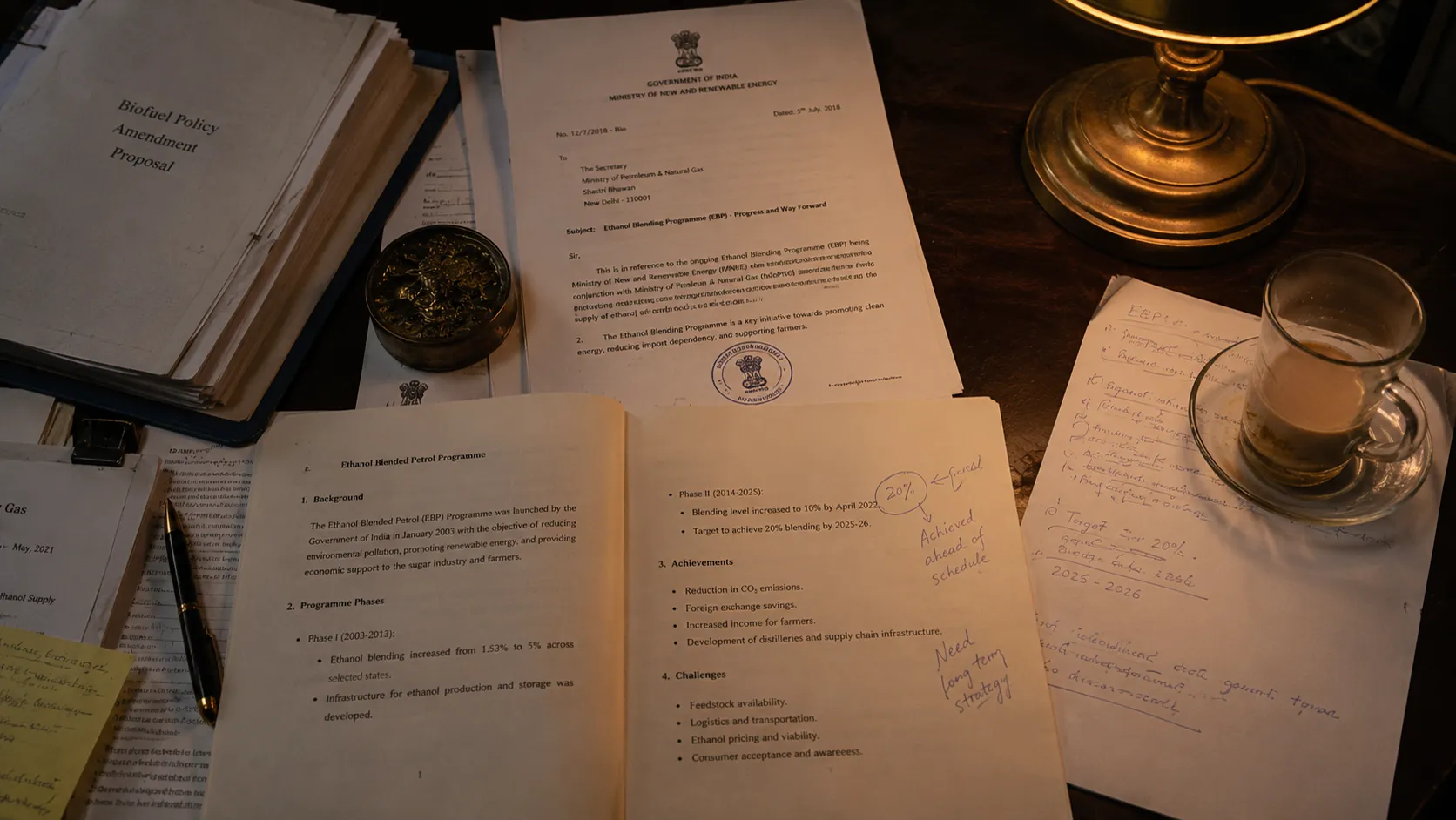
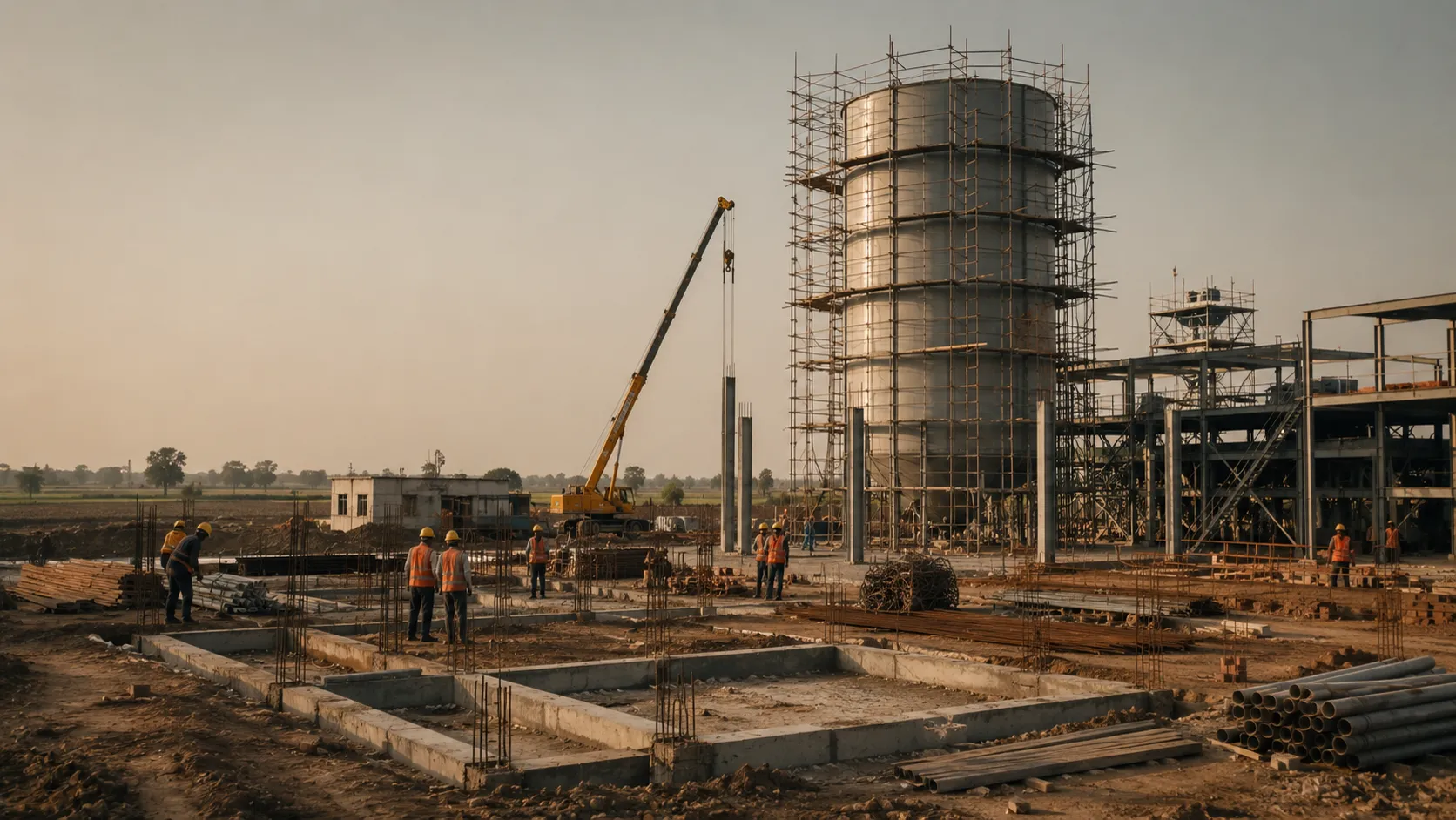
The capital commitment for a 252 TPD greenfield facility is not trivial. Pellet mills at industrial scale, the drying system, storage infrastructure, on-site power supply, weighbridge, and quality laboratory represent a multi-crore investment that takes multiple years to recover. In 2021, the biomass pellet market in India was thin. There were buyers, but there were very few industrial-scale suppliers within the NCR radius. The policy signal was clear in the CAQM direction, but enforcement was still developing.
“We were not making a bet on the technology — pelletisation is a proven process. We were making a bet on the policy timeline. We believed enforcement would catch up with the direction within two to three years. It did.”
— Arun Kumar, Managing Director
What the build involved
The plant is designed around a pellet mill capacity of 252 TPD at target moisture content. The drying system — essential for bringing incoming feedstock from field moisture levels of 20–35% down to the 10–12% required for pelletisation — is the largest capital component. We use a rotary drum dryer system with a heat source that can run on biomass byproducts, reducing our energy input cost relative to gas or grid power-based drying.
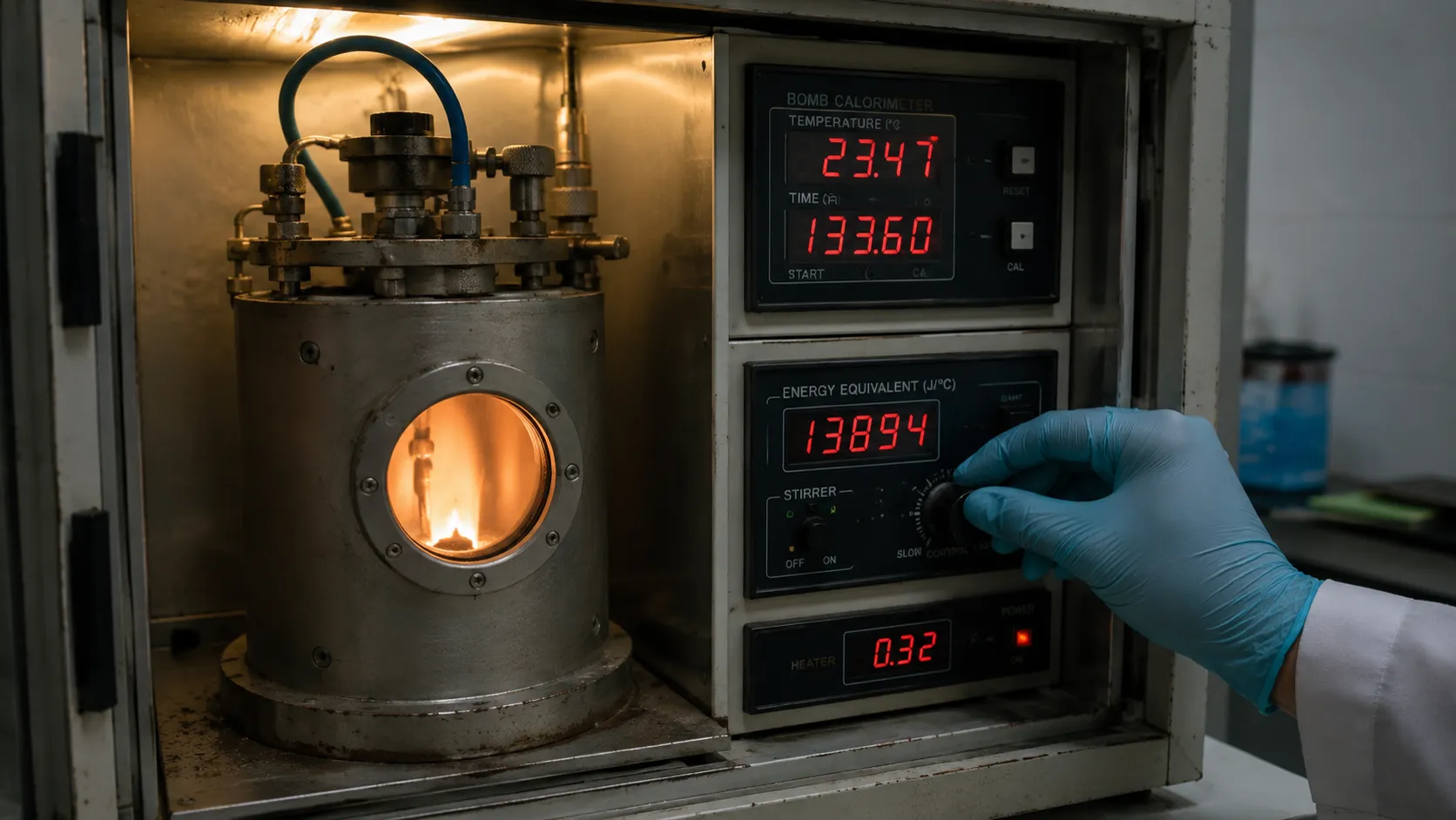
The quality laboratory was not an afterthought. We specified in-house testing capability from the beginning — bomb calorimeter, muffle furnace for ash testing, oven and moisture balance, and a sieve set for fines analysis. The cost of the lab is recovered in the first year of operations from avoided outsourcing cost and from the commercial value of same-day quality data.
The feedstock challenge we underestimated
The hardest part of the first operating year was not the plant — it was the aggregator network. Building a reliable feedstock supply chain from scratch, in a region where biomass aggregation at industrial scale had not previously existed, required more time and relationship-building than we had modelled. The aggregators who are now our most reliable suppliers are people we worked with through a full harvest cycle, calibrated quality expectations with, and established payment terms that work for their cashflow. That process cannot be rushed.
We also underestimated the seasonal variability in feedstock moisture. October–November paddy straw arrives from the field at 20–25% moisture when it has been cut and baled quickly, or at 30–35% when it has been rained on between cut and collection. Our drying capacity was designed for the average, not the worst case. We have since added buffer drying capacity to handle high-moisture intake months without reducing output.
Where we are now
The plant has been operating for more than three years. We have regular customers across thermal power, sugar, brick manufacturing, and food processing sectors. The policy environment has continued to move in the direction we anticipated. Our view is that the next five years will see significantly more demand than supply for quality biomass fuel in the NCR radius — not because supply will not grow, but because the installed base of industrial combustion equipment that is switching from coal is growing faster. The bet has paid off. The next one is capacity expansion.